Synergy Roof Systems
Commercial Roof Repair in Houston, TX
Commercial roof repair in Houston means finding exactly where water is entering a low-slope or metal roof, at a seam, flashing, drain, curb or fastener, and fixing that source before it damages insulation, decking and the space below. Quick, well-documented repairs can keep a roof in service while you plan longer-term work. Synergy Roof Systems traces leaks on TPO, EPDM, modified bitumen and metal roofs, photographs the problem, and schedules repairs around your tenants and operations.
Request a Commercial Repair or call (713) 510-3040.
Signs you need a commercial roof repair
Leaks on commercial buildings often show up far from where they start, because water can travel across the deck and through insulation. Call for an inspection when you see:
- Ceiling tile stains, drips or wet carpet after rain
- Water standing on the roof long after a storm has passed
- Open or separated seams, blisters or splits in the membrane
- Loose or missing perimeter metal and coping after high winds
- Rusted panels, backed-out screws or failing sealant on a metal roof
- Cracked pitch pans or failed flashing around HVAC curbs and pipes
- Clogged drains, scuppers or gutters that overflow during heavy rain
What commercial roof repair includes
Each repair begins with a leak investigation and a written description of the fix. Common repairs include:
- Cleaning and heat-welding new TPO patches over open seams or punctures
- Re-adhering or patching EPDM seams with compatible primers and tapes
- Repairing modified bitumen blisters, splits and lap failures
- Rebuilding flashing at HVAC curbs, pipes, walls and parapets
- Clearing and resealing roof drains, scuppers and gutters
- Replacing wet insulation and damaged deck sections when they are found
- Replacing worn fasteners and resealing laps and trim on metal roofs
Where a roof has many open issues, we may recommend a maintenance plan, a coating if the roof qualifies, or a replacement, and we explain why in writing.
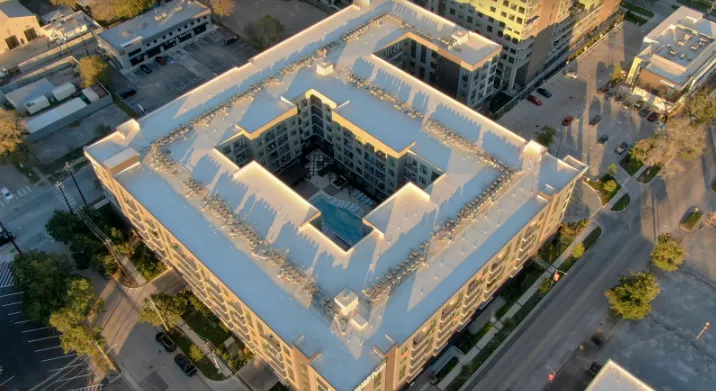
Roof systems we repair
Repair methods depend on the roof system. Thermoplastic membranes such as TPO are repaired with heat-welded patches. EPDM rubber roofs use primers, seam tape and compatible flashing. Modified bitumen roofs are patched with matching membrane layers. Metal roofs need fastener, sealant and panel work rather than membrane patches.
Using the wrong material, such as asphalt mastic smeared over a single-ply membrane, can make every later repair harder. We use products compatible with the existing system so the roof can still be maintained properly.
Emergency and storm repairs
Some leaks cannot wait for the next scheduled visit. When water is entering occupied space, inventory or equipment rooms, the first goal is to stop more water from getting in, then to plan the permanent repair once the roof is dry enough to work on properly.
After a storm, the first visit usually covers:
- Locating active leaks and making temporary repairs where it is safe to do so
- Clearing drains and scuppers so standing water can leave the roof
- Photographing wind, hail or debris damage, including perimeter metal and rooftop equipment
- Noting interior damage locations so they can be matched to the roof above
Office hours are Monday to Friday, 10am to 5pm, and the emergency line at (713) 510-3040 is answered around the clock. The photos from that first visit become the starting point for the repair scope and for any conversation with your insurer.
For property managers and building owners
Repairs on an occupied building have to fit around the people inside it. We coordinate roof access, working hours and noisy or odorous tasks with your property team, protect entrances and parking areas, and keep tenants informed through you so disruption stays minimal.
After each repair, you receive dated photos of the problem and the fix, plus a short written summary. Those records help when you report to owners, budget for capital work or speak with an insurer after storm damage.
For buildings with recurring leaks, a scheduled maintenance plan can catch clogged drains, open seams and loose flashing before they reach the tenants.
How we work
Every commercial repair follows the same four steps.
- Inspection: we walk the roof, check drains, seams, flashing and penetrations, and investigate the interior leak location.
- Written scope: you receive photos and a written repair scope with price, with any longer-term recommendations kept separate.
- Repair: work is scheduled around building operations, using materials compatible with the existing roof system.
- Cleanup and closeout: debris is removed from the roof and grounds, and you get before-and-after photos for your files.
Commercial roofs in Houston's climate
Low-slope roofs in Houston take on intense UV, high surface temperatures and long stretches of humidity. Heat makes membranes expand and contract daily, which stresses seams and flashing over time, and afternoon downpours then test every one of those details at once.
Drainage is the biggest local factor. During heavy rain, a single blocked drain or undersized scupper can leave a large area of roof under water, adding weight and pushing water into any weak seam. Keeping drains clear is one of the most cost-effective things an owner can do.
Before hurricane season, which runs from June through November, check perimeter metal, rooftop equipment curbs and loose items on the roof. Wind gets under weak edges first, and a peeled edge can lead to large membrane loss in a storm.
Rooftop equipment adds its own risks. HVAC technicians, cable installers and other trades walk the roof regularly, and dropped screws, cut membrane and unsealed new penetrations are common sources of leaks. Asking trades to report rooftop work, and having new penetrations flashed by a roofer, prevents many repair calls.
Related services
- Flat Roof Repair & Replacement — Ponding water, clogged drains, blisters and open seams on low-slope roofs.
- TPO Roofing — White single-ply membrane roofs with heat-welded seams, tapered insulation and drainage details.
- Commercial Roof Coatings — Silicone, acrylic and urethane coatings for roofs that pass moisture and adhesion checks.
- Commercial Metal Roofing — R-panel, standing seam and retrofit metal roofs for warehouses, retail, churches and multi-family.
Commercial Roof Repair near you
We work across the Greater Houston area, including:
- Houston, TX
- Pasadena, TX
- Pearland, TX
- League City, TX
- Sugar Land, TX
- Conroe, TX
- Baytown, TX
- Missouri City, TX
- Alvin, TX
- Atascocita, TX
- Bellaire, TX
- Clear Lake, TX
- Cypress, TX
- Friendswood, TX
- Fulshear, TX
- Galveston, TX
- Humble, TX
- Katy, TX
- Kingwood, TX
- Magnolia, TX
- Manvel, TX
- Richmond, TX
- Rosenberg, TX
- Spring, TX
- The Woodlands, TX
- Tomball, TX
- Webster, TX
- West University Place, TX
Request a Commercial Repair or call (713) 510-3040.
Explore Synergy Roof Systems
- Home remodeling, repairs and restoration
- Residential roofing
- Commercial roofing
- Storm damage roof repair
- Roof maintenance
- Roof soft washing
- Fence Staining & Painting
- Roof Replacement in Houston
- Roof Repair in Houston
- Roof Inspections in Houston
- Hail & Storm Damage in Houston
- Metal Roofing in Houston
- Roofing advice and storm tips
- Request a roofing consultation
Frequently asked questions
How do you find a leak on a flat commercial roof?
We start at the interior leak location, then inspect the roof above and upslope, checking seams, flashing, drains and penetrations. Water can travel under the membrane, so the source may be some distance from the stain.
Can you repair the roof while the business stays open?
In most cases, yes. We plan access, staging and working hours with your property team so tenants can keep operating, and we flag any tasks that need extra coordination.
When should a commercial roof be replaced instead of repaired?
When leaks are spread across the roof, insulation is wet in large areas, or the membrane is failing in many places, repairs stop being cost-effective. We document the condition so owners can compare repair, coating and replacement options.
Do you repair metal commercial roofs as well as flat roofs?
Yes. Metal roof repairs typically involve replacing worn fasteners, resealing laps and trim, and addressing rust or damaged panels, while membrane roofs need seam and flashing repairs.
Will I get documentation for my insurer or ownership group?
Yes. Each repair includes dated photos and a written summary of what was found and fixed, which you can share with owners, lenders or insurers.