Synergy Roof Systems
TPO Roofing in Houston, TX
TPO roofing is a single-ply white membrane used on many Houston commercial buildings because it reflects sunlight, has heat-welded seams and works well on low-slope roofs. It is a common choice for warehouses, retail centers, offices and multi-family buildings that need a dependable flat roof at a sensible cost. Synergy Roof Systems installs and repairs TPO roofs, with the insulation, drainage and flashing details defined in a written scope before work begins.
Request a TPO Estimate or call (713) 510-3040.
Signs you need a new TPO roof or TPO repairs
On an existing TPO roof, or an older roof that may be replaced with TPO, watch for:
- Seams that have opened, lifted or show gaps when probed
- Membrane that is cracked, crazed or worn thin, exposing the reinforcing scrim
- Punctures from foot traffic, dropped tools or storm debris
- Soft areas underfoot that suggest wet insulation
- Membrane pulling tight at walls, curbs or edges
- Ponding water that leaves dirt rings after it dries
- An older built-up, modified bitumen or coated roof that is ready for replacement
Isolated seam and puncture problems are usually repairable. When many areas show wear or the insulation below is wet, a new TPO system is the more reliable answer.
What a TPO roofing project includes
A TPO roof is a system, not just a membrane. A complete scope typically covers:
- Survey of the existing roof, deck and insulation, including moisture checks where needed
- Tear-off of failed roofing, or a recover over the existing roof where codes and the manufacturer allow it
- Insulation boards, often polyiso, with tapered sections to move water toward drains
- Cover board where the system calls for it, to protect the insulation and support foot traffic
- TPO membrane attached mechanically, fully adhered or induction welded, depending on the system specified
- Hot-air welded seams, probed and checked during installation
- Flashing at walls, parapets, curbs, pipes and drains, plus new edge metal and coping
- Walkway pads along service paths to rooftop equipment
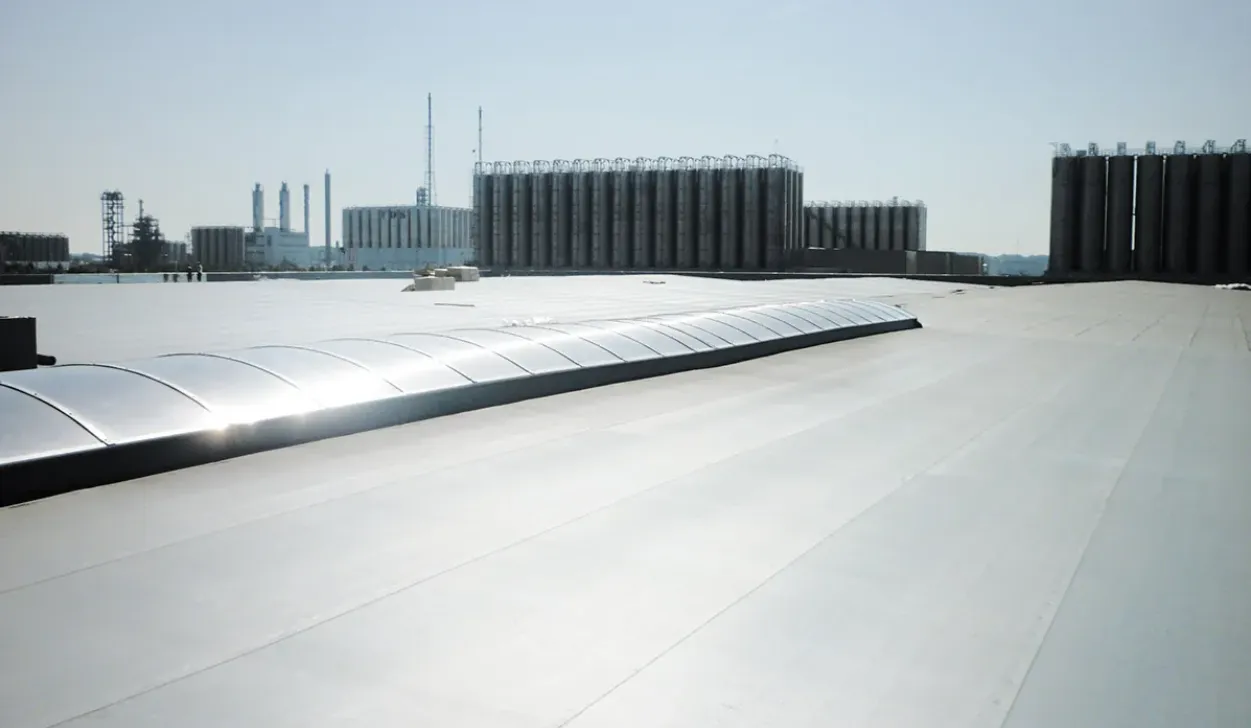
TPO options and thickness
TPO comes in different thicknesses, commonly 45, 60 and 80 mil. Thicker membranes add more material over the reinforcing scrim, which helps with durability and foot traffic. The right choice depends on the building, the budget and the manufacturer's warranty requirements.
Attachment method affects wind performance and cost. Mechanically attached systems fasten the membrane through the insulation into the deck. Fully adhered systems glue the membrane down for a smooth surface. Induction-welded systems bond the membrane to plates without penetrating it at each fastener. We explain which method suits your deck type and wind exposure.
White TPO is the most common color in Houston because a reflective surface can reduce roof temperatures and cooling load. Gray and tan options are available where appearance matters from neighboring buildings.
Questions to ask about a TPO proposal
TPO proposals can look similar on the surface while describing very different roofs. Before you compare prices, check that each proposal answers the same questions:
- Is the existing roof being torn off or recovered, and how will wet insulation be found and removed?
- What membrane thickness and attachment method are specified?
- What insulation type and total thickness are included, and is tapered insulation part of the design?
- How are drains, scuppers, curbs and walls flashed, and is new edge metal included?
- Is a cover board included, and where will walkway pads go?
- Which warranty is offered, and what maintenance does it require from the owner?
If a proposal leaves any of these out, ask for it in writing before you sign.
For property managers and building owners
TPO projects on occupied buildings are usually phased, so only part of the roof is open at a time and each section is watertight at the end of the day. We coordinate crane lifts, material staging, adhesive odors near air intakes and noise with your property team to keep tenant disruption minimal.
You receive photos during and after installation, plus product and warranty paperwork at closeout. Those records support budgeting, insurance conversations and the eventual sale of the property.
Once the roof is installed, scheduled maintenance keeps drains clear and seams checked, which matters for both performance and warranty requirements.
How we work
Every TPO project follows the same four steps.
- Inspection: we survey the roof, deck and insulation, check drainage, and note rooftop equipment and access.
- Written scope: the proposal specifies membrane thickness, attachment method, insulation and taper, flashing, edge metal and warranty options.
- Installation: crews install in phases with daily tie-ins, probing seams as they go.
- Cleanup and closeout: debris is cleared, final seams and flashing are reviewed, and you receive photos plus warranty documents.
TPO roofing in Houston's climate
Houston roofs spend much of the year under strong sun. A white TPO surface reflects more of that energy than dark roofing, which can lower the temperature of the membrane and the space beneath it.
Rain is the other priority. Many low-slope buildings in the area were built with very little slope, so tapered insulation, crickets and additional drains are often part of a TPO project to move water off the roof faster.
Wind uplift matters on large, open roofs during tropical storms and hurricane season. The attachment pattern, perimeter enhancements and edge metal should be designed for the building's height and exposure, especially for properties closer to the coast.
Rooftop traffic is the last local factor. Buildings with many rooftop HVAC units see frequent service visits through the hot months, so walkway pads, protected service paths and thicker membrane in high-traffic areas help a TPO roof hold up between inspections.
Related services
- Flat Roof Repair & Replacement — Ponding water, clogged drains, blisters and open seams on low-slope roofs.
- Commercial Roof Repair — Leak tracing and repairs on TPO, EPDM, modified bitumen and metal roofs, scheduled around tenants.
- Commercial Roof Coatings — Silicone, acrylic and urethane coatings for roofs that pass moisture and adhesion checks.
TPO Roofing near you
We work across the Greater Houston area, including:
- Houston, TX
- Pasadena, TX
- Pearland, TX
- League City, TX
- Sugar Land, TX
- Conroe, TX
- Baytown, TX
- Missouri City, TX
- Alvin, TX
- Atascocita, TX
- Bellaire, TX
- Clear Lake, TX
- Cypress, TX
- Friendswood, TX
- Fulshear, TX
- Galveston, TX
- Humble, TX
- Katy, TX
- Kingwood, TX
- Magnolia, TX
- Manvel, TX
- Richmond, TX
- Rosenberg, TX
- Spring, TX
- The Woodlands, TX
- Tomball, TX
- Webster, TX
- West University Place, TX
Request a TPO Estimate or call (713) 510-3040.
Explore Synergy Roof Systems
- Home remodeling, repairs and restoration
- Residential roofing
- Commercial roofing
- Storm damage roof repair
- Roof maintenance
- Roof soft washing
- Fence Staining & Painting
- Roof Replacement in Houston
- Roof Repair in Houston
- Roof Inspections in Houston
- Hail & Storm Damage in Houston
- Metal Roofing in Houston
- Commercial Metal Roofing in Houston
- Roofing advice and storm tips
- Request a roofing consultation
Frequently asked questions
What is the difference between TPO and EPDM?
TPO is a thermoplastic membrane, usually white, with heat-welded seams. EPDM is a synthetic rubber membrane, often black, with seams joined by tape or adhesive. Both are proven low-slope systems; the better fit depends on the building and project goals.
Can TPO be installed over my existing roof?
Sometimes. A recover may be allowed if the existing roof is dry, sound and within code limits on layers. Wet insulation must be removed first. We check the roof before recommending a recover or a tear-off.
Is white TPO worth it in Houston?
A reflective roof can reduce the heat absorbed by the building, which may help cooling costs and comfort. Actual savings depend on insulation, the HVAC system and how the building is used.
How thick should my TPO membrane be?
Common options are 45, 60 and 80 mil. Many owners choose a thicker membrane for roofs with regular foot traffic or long ownership plans, and the proposal shows the options side by side.
Can TPO roofs be repaired?
Yes. Clean, weathered TPO can usually be repaired by heat-welding new patches over punctures and open seams. Very old or chalky membrane may need special preparation or replacement of the affected area.