Synergy Roof Systems
Flat Roof Repair & Replacement in Houston
Flat roof repair and replacement in Houston deals with low-slope roofs made of TPO, EPDM or modified bitumen, where the most common problems are ponding water, clogged drains, open seams and worn flashing. Small problems can often be repaired, while roofs with widespread leaks or wet insulation usually need replacement. Synergy Roof Systems inspects the roof, explains which path makes sense, and puts the scope in writing for commercial buildings and homes with flat sections alike.
Request a Flat Roof Estimate or call (713) 510-3040.
Signs your flat roof needs attention
Flat roofs fail differently from sloped ones because water does not run off quickly. Watch for:
- Water still standing on the roof two days after rain
- Clogged drains, scuppers or gutters, or water spilling over the roof edge
- Blisters, bubbles or ridges in the roofing
- Cracks or splits, especially where the roof meets walls or curbs
- Open seams or laps that lift at the edges
- Interior stains or drips during heavy rain
- Soft spots that suggest wet insulation or deck damage
Ponding water and drains
A common industry rule of thumb treats water still standing about 48 hours after rain as ponding. Ponding adds weight, speeds membrane wear, collects dirt and can push water into any weak seam. It often points to deck deflection, compressed insulation or drains set higher than the surrounding roof.
Drain problems are frequent on Houston buildings, where leaves, debris and silt from heavy storms collect at strainers. Fixes can include clearing and resetting drains, adding drains or scuppers, installing tapered insulation and crickets to redirect water, or rebuilding low areas during a replacement.
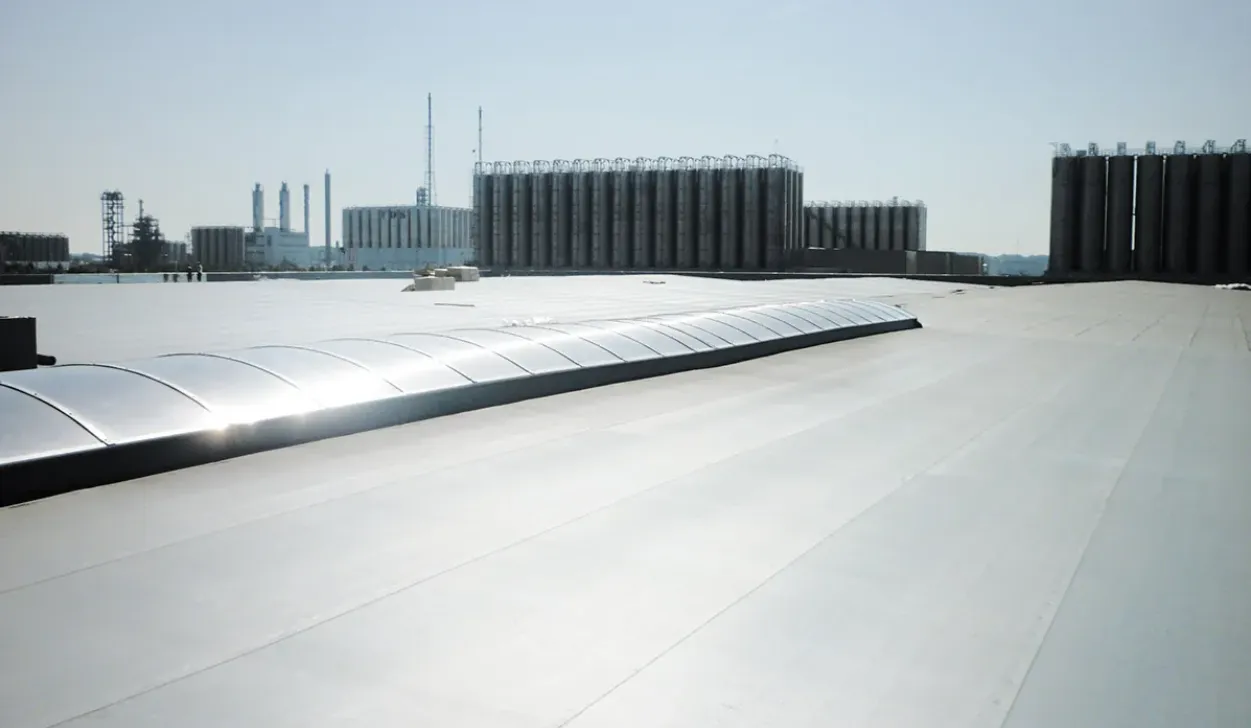
Flat roofing systems and options
Most low-slope roofs in the Houston area use one of three systems:
- TPO: a white, heat-welded single-ply membrane that reflects sunlight and is widely used on commercial buildings
- EPDM: a durable synthetic rubber membrane, usually black, joined with seam tape and adhesives
- Modified bitumen: asphalt-based sheets installed in layers, often with a granulated cap sheet, common on smaller buildings and residential flat sections
Coatings can also restore some flat roofs if the existing roof is dry and sound enough to qualify. We explain how each option fits your roof, your budget and your plans for the building.
What flat roof repair and replacement includes
Repairs focus on the failing area: patching seams and punctures, rebuilding flashing at walls and curbs, cutting out and repairing blisters, and clearing or resetting drains. A replacement scope typically adds:
- Removing failed roofing and any wet insulation
- Repairing damaged deck sections
- New insulation, including tapered layers to improve drainage
- A new membrane system with flashing at every wall, curb and penetration
- New edge metal, coping and drain components where needed
- Cleanup of the roof and grounds
Repair or replace: how the decision is made
The right answer depends less on the roof's age than on what is under the surface. A flat roof with a few open seams over dry insulation can often be repaired for years. A roof with water trapped in the insulation keeps leaking from new spots no matter how many patches go on top, and the wet insulation can damage the deck.
To make the call, we look at how many areas are leaking, whether the insulation is wet and how widely, how well the roof drains, and whether the membrane is still flexible enough to accept repairs. We then lay out the options side by side: targeted repairs, repairs plus drainage improvements, a coating where the roof qualifies, or replacement. Each option is described in writing with its trade-offs, so owners can match the choice to their budget and how long they plan to keep the building.
For property managers and building owners
Flat roof work on an occupied property is planned around access, tenants and weather. We phase replacements so the building stays dry each night and keep entrances, parking and loading areas clear of hazards, keeping tenant disruption to a minimum.
Photo reports of drains, seams and problem areas give owners and insurers a clear record before and after the work. Ponding and drainage issues are easier to track over time when each visit is documented.
Flat roofs benefit most from routine care. A maintenance plan keeps drains clear and catches open seams before the next heavy rain.
How we work
Flat roof projects follow the same four steps.
- Inspection: we check the membrane, seams, flashing, drains and interior stains, and probe for wet insulation where needed.
- Written scope: you receive photos and a scope that separates immediate repairs from drainage improvements or replacement options.
- Work: repairs or replacement are scheduled around weather and occupants, with each section left watertight.
- Cleanup and closeout: debris is cleared from the roof and grounds, and you receive completion photos and product paperwork.
Flat roofs and Houston rain
The Houston area can see intense rain in short periods, from summer thunderstorms to tropical systems. A flat roof has to move that water to drains quickly, and any obstruction backs it up across the roof surface.
High heat and humidity add stress. Modified bitumen can blister when moisture is trapped beneath it, and membranes expand and contract with daily temperature swings. Leaves and needles from the area's oaks and pines can block drains within a single season.
Many homes in the area also have flat or low-slope sections over porches, additions or garages that tie into sloped shingle roofs. Those transitions need careful flashing because water from the steeper roof concentrates there.
Related services
- TPO Roofing — White single-ply membrane roofs with heat-welded seams, tapered insulation and drainage details.
- Commercial Roof Repair — Leak tracing and repairs on TPO, EPDM, modified bitumen and metal roofs, scheduled around tenants.
- Commercial Roof Coatings — Silicone, acrylic and urethane coatings for roofs that pass moisture and adhesion checks.
- Commercial Metal Roofing — R-panel, standing seam and retrofit metal roofs for warehouses, retail, churches and multi-family.
Flat Roof Repair & Replacement near you
We work across the Greater Houston area, including:
- Houston, TX
- Pasadena, TX
- Pearland, TX
- League City, TX
- Sugar Land, TX
- Conroe, TX
- Baytown, TX
- Missouri City, TX
- Alvin, TX
- Atascocita, TX
- Bellaire, TX
- Clear Lake, TX
- Cypress, TX
- Friendswood, TX
- Fulshear, TX
- Galveston, TX
- Humble, TX
- Katy, TX
- Kingwood, TX
- Magnolia, TX
- Manvel, TX
- Richmond, TX
- Rosenberg, TX
- Spring, TX
- The Woodlands, TX
- Tomball, TX
- Webster, TX
- West University Place, TX
Request a Flat Roof Estimate or call (713) 510-3040.
Explore Synergy Roof Systems
- Home remodeling, repairs and restoration
- Residential roofing
- Commercial roofing
- Storm damage roof repair
- Roof maintenance
- Roof soft washing
- Fence Staining & Painting
- Roof Replacement in Houston
- Roof Repair in Houston
- Roof Inspections in Houston
- Hail & Storm Damage in Houston
- Metal Roofing in Houston
- Roofing advice and storm tips
- Request a roofing consultation
Frequently asked questions
Why does water keep standing on my flat roof?
Ponding usually comes from a sagging deck, compressed insulation or drains that sit higher than the surrounding roof. The fix may be as simple as clearing a drain or may require adding taper or drains during a replacement.
Is a little ponding normal on a flat roof?
Small puddles that dry within a day or two are common. Water that remains longer can shorten the life of the roof and should be looked at, especially near seams and drains.
Which flat roof system is best for my building?
TPO, EPDM and modified bitumen each have strengths. The best option depends on the building's use, roof traffic, existing system, drainage and budget, and we compare the options in writing.
Can a flat roof be repaired instead of replaced?
Yes, if the problems are localized and the insulation underneath is mostly dry. If moisture is widespread, replacement is usually the more reliable choice.
Do you work on flat roof sections of homes?
Yes. Many homes have low-slope sections over porches, additions or garages. Those areas are repaired or replaced and tied into the surrounding sloped roof with proper flashing.